
If you’re researching garage floor coatings, you’ve probably seen two products come up over and over again: epoxy and polyaspartic.
At first glance, they can look similar. Both can improve the appearance of a garage floor. Both can add protection. Both can be installed with decorative flake systems.
But they’re not the same product.
The difference matters because the coating system you choose will affect durability, installation time, UV resistance, and long-term performance.
Here’s what homeowners should know before making a decision.
What Is Epoxy?
Epoxy has been used in concrete coatings for decades. It’s a resin-based coating that bonds to properly prepared concrete and creates a hard protective surface.
For many years, epoxy was considered the standard option for garage floors.
The biggest advantage of epoxy is cost. In many cases, epoxy systems have a lower upfront price than premium coating systems.
The downside is performance.
Traditional epoxy coatings can yellow when exposed to sunlight. They typically require longer cure times, and they can become vulnerable to hot tire pickup, a common cause of coating failure in residential garages.
What Is Polyaspartic?
Polyaspartic coatings are a newer generation of concrete coating technology.
They’re designed to cure faster, resist UV exposure, and provide greater long-term durability.
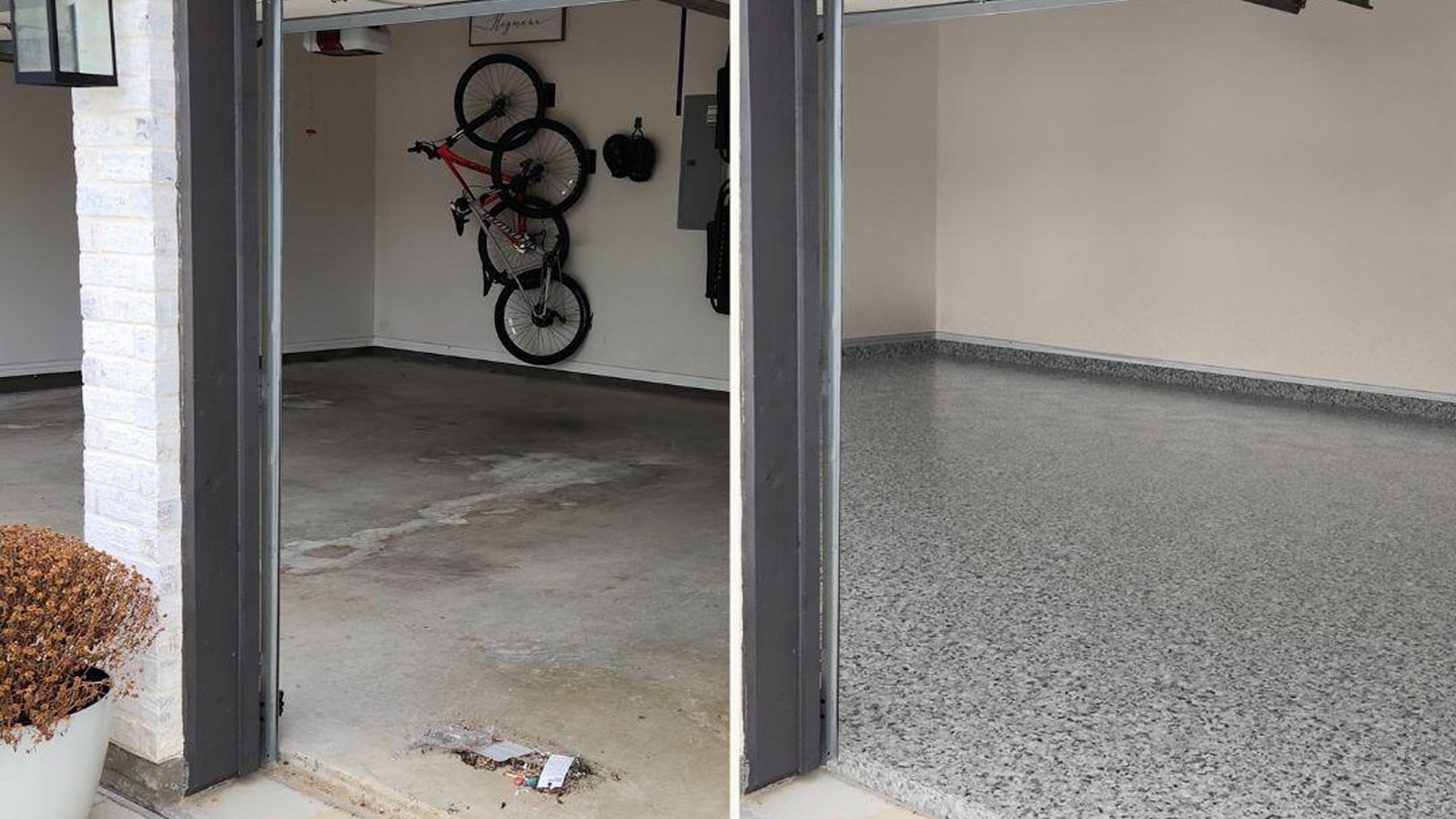
When installed correctly over a properly prepared slab, a polyaspartic flake system creates a highly durable floor that can withstand daily vehicle traffic, chemical spills, and temperature changes.
For homeowners, that means less downtime and better long-term performance.
Durability Comparison
The biggest difference between the two systems is durability.
Many epoxy systems perform well initially but begin showing wear as the years pass.
Polyaspartic systems are designed to withstand heavier use while maintaining their appearance.
For garages that see daily vehicle traffic, tool storage, lawn equipment, and workshop activity, durability becomes a major factor.
A coating is only as good as its ability to perform years after installation.
UV Stability
Sunlight is one of the biggest challenges for garage floor coatings.
Garages with windows or doors that remain open regularly expose coatings to UV rays.
Traditional epoxy systems can yellow over time.
Polyaspartic topcoats are UV stable and maintain their color and clarity much more effectively.
For homeowners investing in decorative flake systems, this is an important consideration.
Installation Time
Epoxy systems often require multiple days to complete and additional cure time before normal use.
Polyaspartic systems are known for rapid curing.
Many installations can be completed in a single day, allowing homeowners to get back to using their garage much sooner.
Hot Tire Resistance
Hot tire pickup occurs when warm vehicle tires soften a coating and pull material away from the concrete surface.
It’s one of the most common complaints with lower-quality coating systems.
Properly installed polyaspartic systems offer significantly better resistance to this issue than traditional epoxy-only systems.
Which System Should You Choose?
If your primary goal is the lowest possible upfront price, epoxy may still be an option.
If your goal is long-term durability, UV stability, faster installation, and premium performance, a professionally installed polyaspartic system is typically the better investment.
That’s why SCC-certified dealers install coating systems built around proven preparation methods and premium materials designed for real-world performance.
The Bottom Line
The coating matters.
The installer matters more.
Most floor failures don’t happen because the chemistry was wrong. They happen because the slab wasn’t prepared correctly, moisture wasn’t addressed, or installation standards weren’t followed.
Whether you’re evaluating epoxy or polyaspartic, make sure you’re also evaluating the contractor behind the installation.
The right system installed the right way can protect and improve your garage floor for years to come.